Trout fishing changes all year long. The same river that’s quiet and slow in January can be boiling with bugs in June and full of aggressive brown trout in October. Knowing what trout are doing each season tells you where to fish, when to go and what to tie on.
This guide walks through fly fishing season by season, with a hatch calendar, a water temperature guide and the flies we carry from winter spring creeks in the Driftless to summer hopper banks in Wyoming.
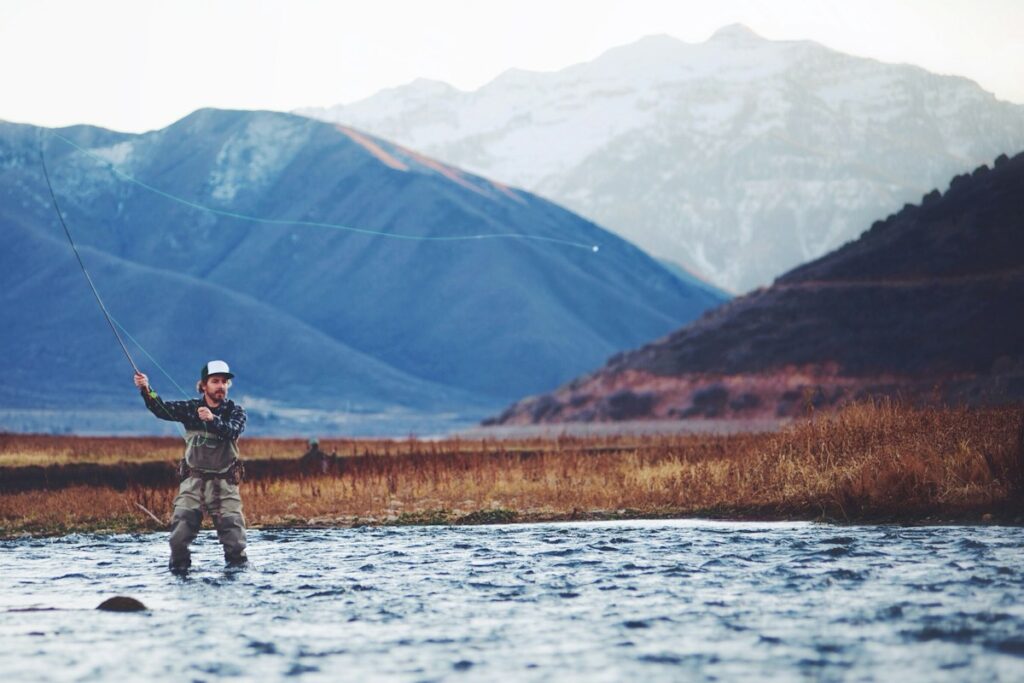
Snow still on the peaks, trout already feeding below. Photo: Andrew Meehan on Unsplash.
The Big Picture
Three things drive almost everything trout do through the year:
- Water temperature. Trout are cold-blooded. Their metabolism, appetite and location all follow the temperature of the water.
- Food. Insect hatches follow the calendar. Match the bugs that are active and you’ll catch more fish.
- Light and flow. Bright sun, runoff and low summer water all push trout to different parts of the river.
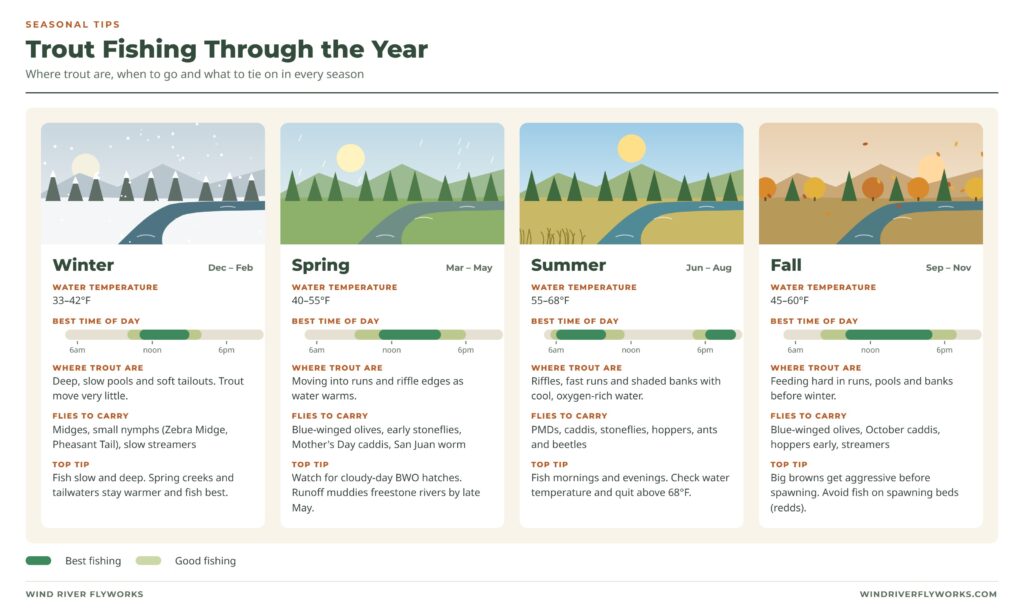
Here’s how the year looks at a glance.
Winter (December to February)
Winter fishing is slow, quiet and often excellent if you adjust. Water temperatures sit in the 30s and low 40s, so trout hold in deep, slow pools and soft tailouts and don’t move far to eat.
- When: the warmest part of the day, roughly 11am to 3pm. There’s no reason to be on the water at sunrise.
- Where: spring creeks and tailwaters below dams stay warmer than freestone rivers and fish best. That’s why the Driftless spring creeks are a winter favorite.
- Flies: midges (Zebra Midge, Griffith’s Gnat), small nymphs like the Pheasant Tail, and streamers fished very slowly.
- How: fish slow and deep. Get your nymph right on the bottom and let it drift. On sunny afternoons, watch for midges hatching and trout rising in slow water.
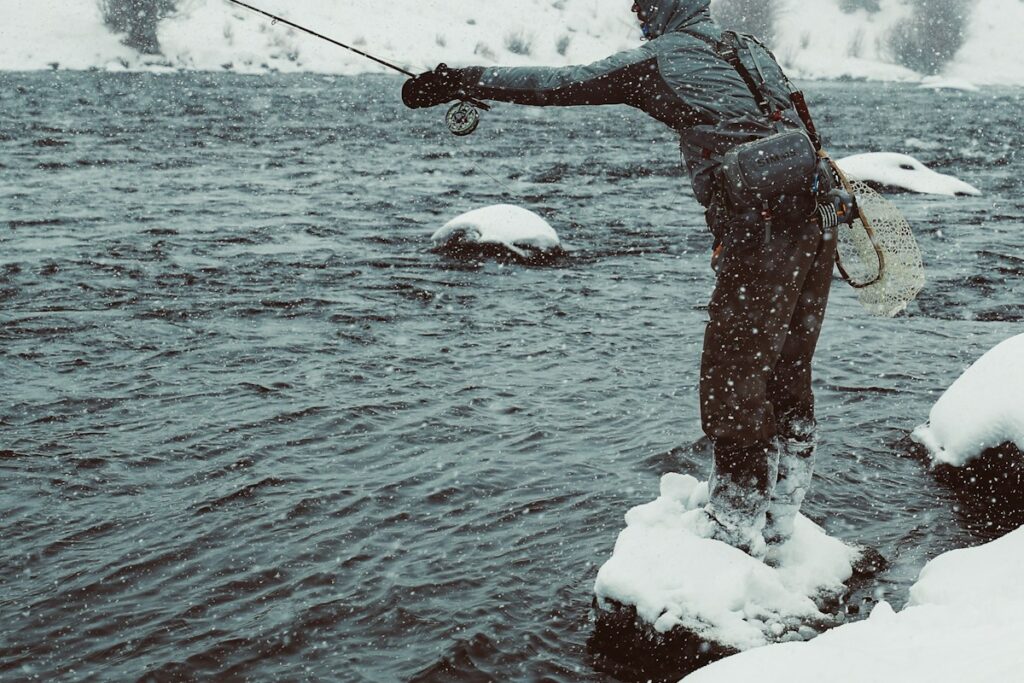
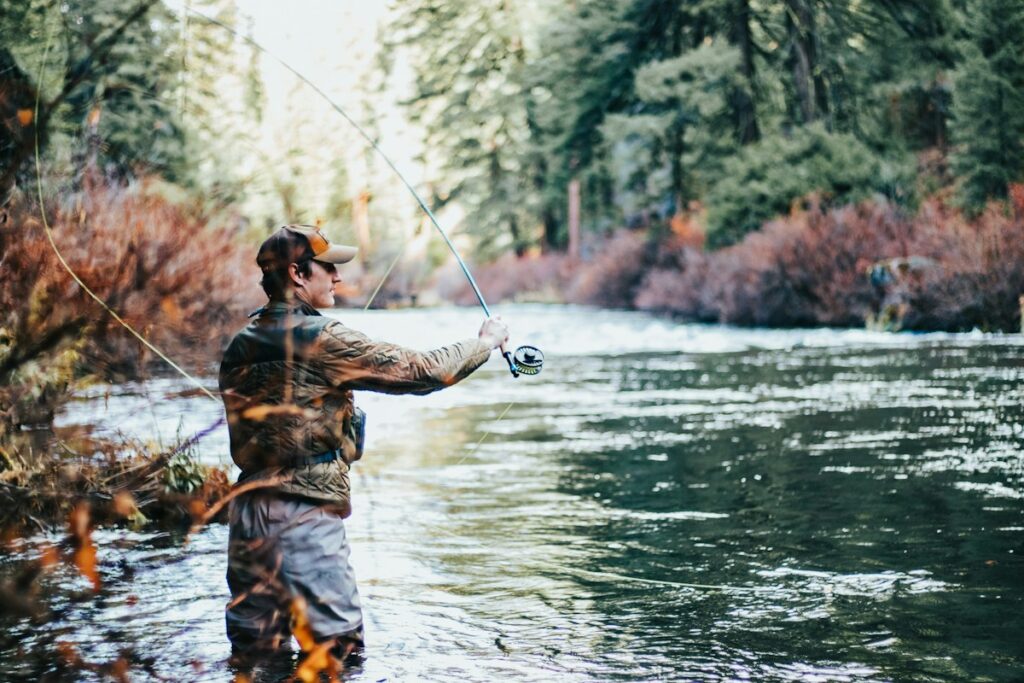
Winter days are short, but the fishing can be good in the middle of the day. Photo: jack murrey on Unsplash.
Spring (March to May)
As the water warms into the 40s and 50s, trout move out of the deep wintering pools into runs and the edges of riffles, and they start feeding hard.
- Blue-winged olives hatch best on cloudy, drizzly days. Some of the best dry fly fishing of the year happens in bad weather.
- Early stoneflies and Mother’s Day caddis bring trout to the surface on many western rivers.
- Runoff arrives in May or June on freestone rivers as the snow melts. Rivers rise and turn muddy. Fish the edges with bigger, darker flies, or switch to a tailwater or spring creek until it clears.
- Spawning: rainbows and cutthroat spawn in spring. Avoid wading through gravel beds (redds) and leave spawning fish alone.
Summer (June to August)
Summer is the season of big hatches and dry flies, but also of warm water. Trout move into riffles, fast runs and shaded banks where the water is cooler and holds more oxygen.
- Hatches: pale morning duns, caddis, golden stones, salmonflies and green drakes in early summer, then tricos on summer mornings.
- Terrestrials: by July, hoppers, ants and beetles are falling into the river. Slap a hopper tight to a grassy bank on a windy afternoon and hang on.
- Timing: fish early mornings and evenings. Midday sun and warm water make trout sluggish.
- Check the temperature: when the water climbs past 68°F, stop fishing for trout. A fish caught in warm water may not survive even if it swims away.
Summer mornings: cool water, active fish and the day’s first hatches. Photo: Greysen Johnson on Unsplash.
Fall (September to November)
Many anglers think fall is the best season of all. Water cools back into the 50s, crowds thin out, and trout feed hard to put on weight before winter.
- Blue-winged olives come back strong, especially on overcast afternoons.
- October caddis are big, orange and easy to see. An orange-bodied Elk Hair Caddis is a great match.
- Hoppers keep working until the first hard frost.
- Streamers shine. Brown trout get aggressive before they spawn and will chase a big fly.
- Spawning browns: leave fish on their redds alone and watch where you wade.
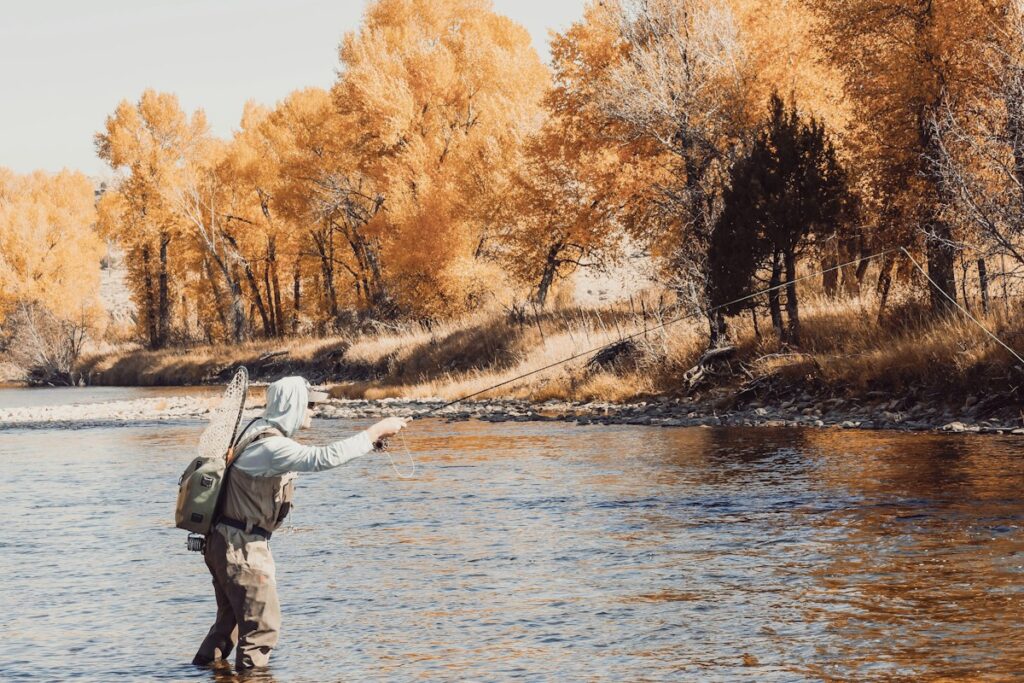
Fall color, cooler water and hungry brown trout. Photo: Glenna Haug on Unsplash.
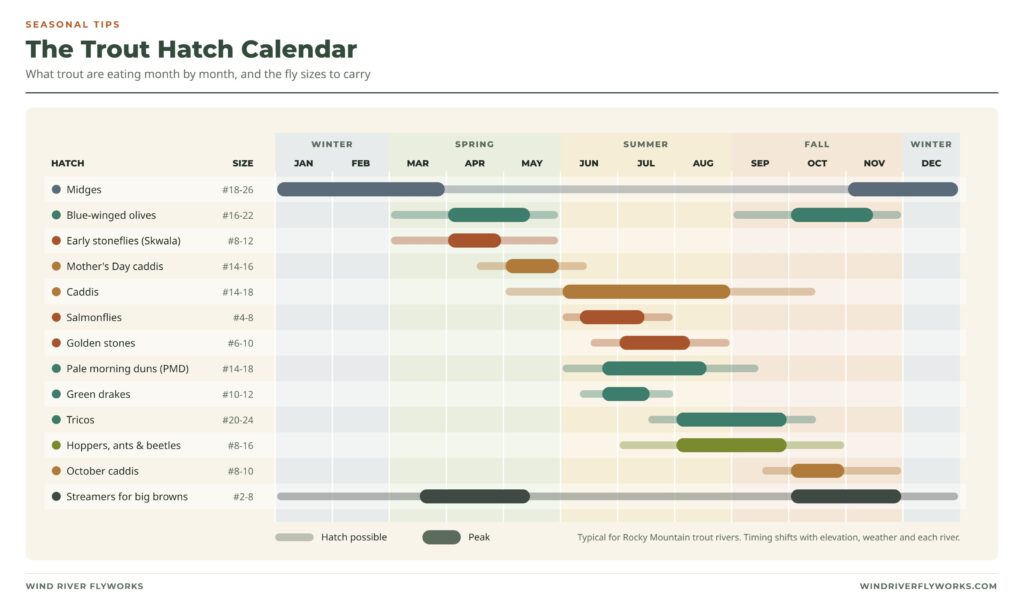
The Hatch Calendar
Use this calendar as a starting point for what to carry each month. Timing shifts with elevation and weather and varies from river to river, so check with a local fly shop for the waters you fish.
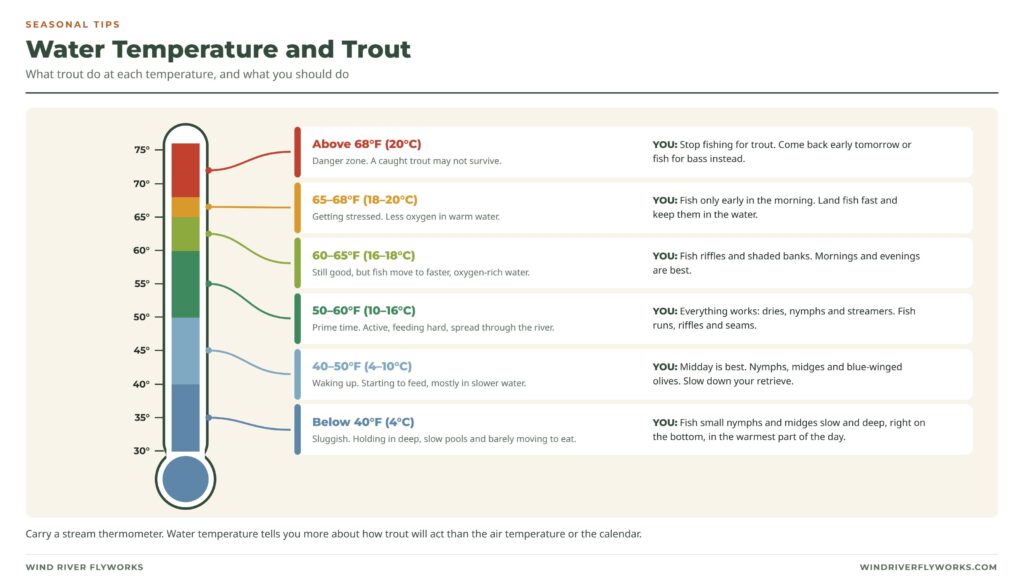
Water Temperature Matters Most
A cheap stream thermometer is one of the most useful things in your vest. Water temperature tells you more about how trout will behave than the calendar or the air temperature.
Keep Learning
Want to know exactly where trout hold in each season? See Reading the Water and How to Read a River for Trout. For the flies themselves, read How to Choose Flies, and for winter’s most important bug, see our guide to Midges and Small Flies.
Flies in This Guide

Bionic Ant
Get it from Jacobs Fork →
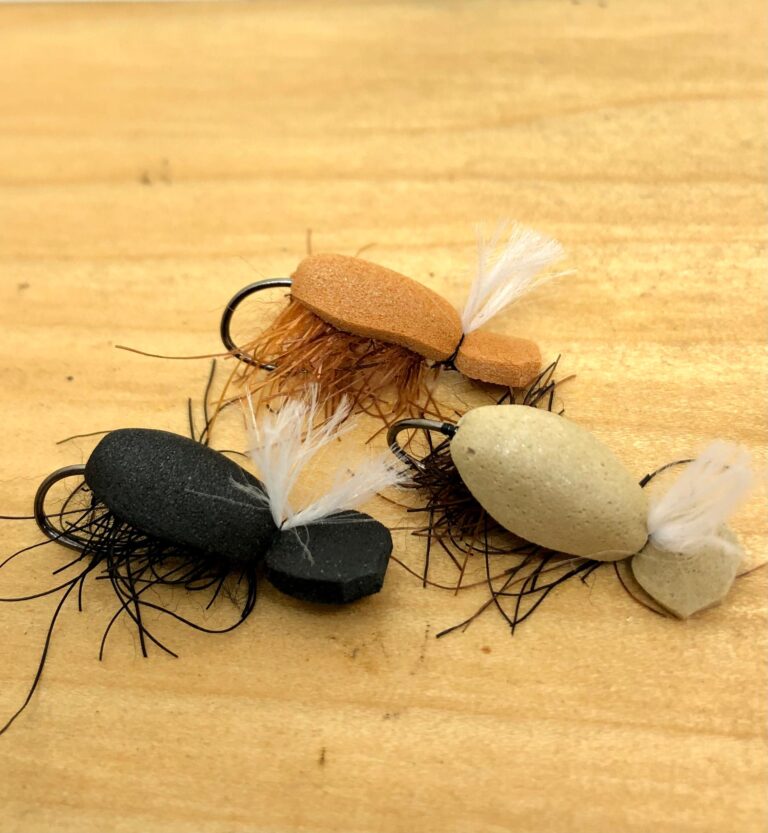
Jake's Beetle
Get it from Jacobs Fork →
Flies tied by Jacobs Fork Fly Tying, photos used with permission. We don’t earn anything from these links.
Shop This Article
Stickers and gear that go with this guide, drawn by Nick and printed in the USA.
-
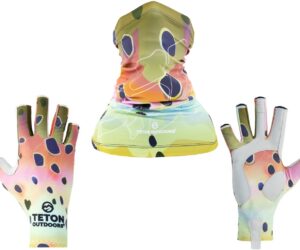
Trout Series Glove & Neck Gaiter Bundle
$24.99 Select options This product has multiple variants. The options may be chosen on the product page -
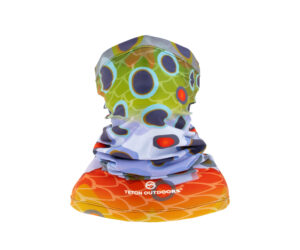
Trout Series Neck Gaiter
$10.99 Select options This product has multiple variants. The options may be chosen on the product page -
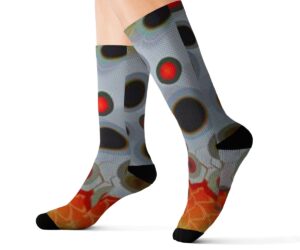
Brown Trout Fly Fishing Socks
$14.99 Select options This product has multiple variants. The options may be chosen on the product page