The best fly in the world won’t catch a trout that isn’t there. Learning how to read water is the skill that separates anglers who catch fish from those who don’t, and it works on any river, anywhere. Once you know where trout hold in rivers and why, you’ll stop casting to empty water and start fishing the spots that matter.
This guide explains trout feeding lies, the main water types (riffles, runs, pools and tailouts), the features that hold fish, and how trout move with the seasons.
What Trout Want
Everything about reading trout water comes back to three needs:
Food: trout want a steady supply of insects and baitfish carried to them by the current.
Cover: protection from birds, otters and anglers. Depth, broken water, shade, rocks, wood and undercut banks all count.
Easy current: trout can’t fight fast water all day. They hold in soft water next to faster water, so they can rest and still grab food as it drifts by.
A spot that gives a trout all three is called a prime lie, and it’s where the biggest fish live. Remember that trout almost always face upstream, into the current, waiting for food to come to them.
The Four Main Water Types
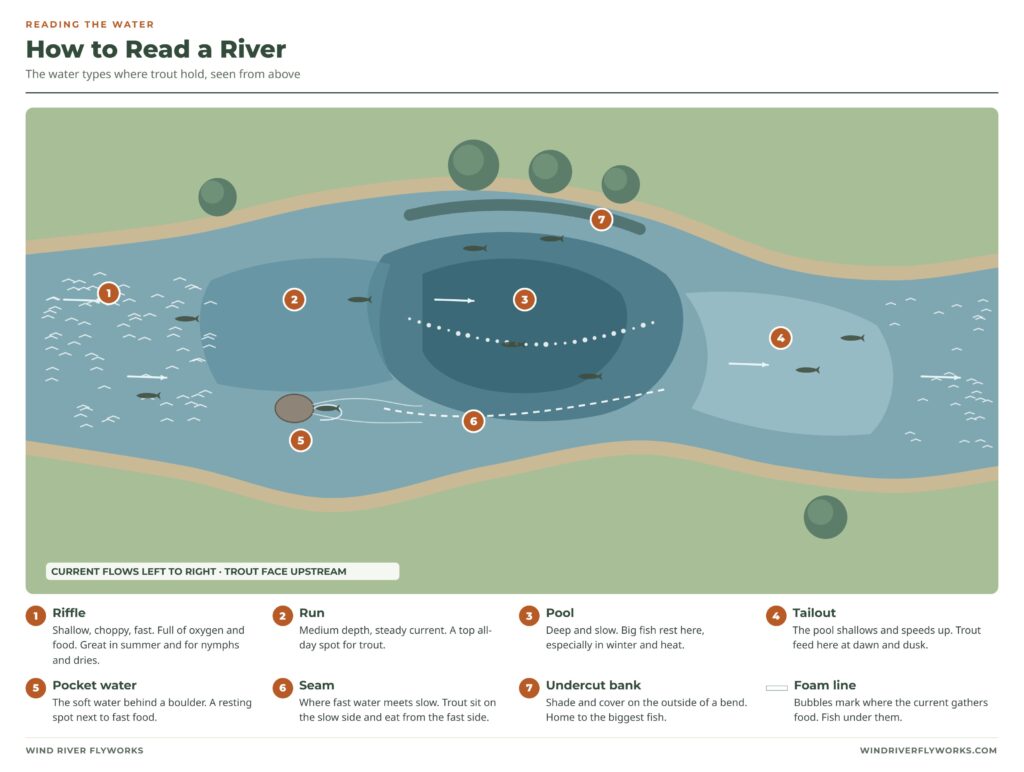
Riffles
Shallow, fast and choppy water over rocks. Riffles are full of oxygen and insect life, so trout feed here, especially in summer and during hatches. Look for slightly deeper slots and the edges of riffles. Nymphs and dry flies both work well.
Runs
Runs are deeper and smoother than riffles, with a steady current that’s about walking speed. They offer food, cover and comfortable current all at once, which makes them one of the best all-day spots on any river. If you only have time to fish one type of water, fish the runs.
Pools
Pools are deep and slow. Big trout rest here, especially in winter and during summer heat. Fish the head of the pool, where the current enters and brings food, and the deep middle with nymphs or streamers.
Tailouts
At the bottom of a pool, the water gets shallower and faster before the next riffle. Trout move into tailouts to feed, particularly at dawn and dusk. The water is often smooth and clear, so approach carefully and make a soft presentation.
Features That Hold Trout
Seams: the line where fast water meets slow water. Trout sit on the slow side and dart into the fast side to eat. Seams are some of the most reliable trout feeding lies in any river.
Pocket water: the soft water behind and in front of boulders. Each pocket can hold a fish.
Undercut banks: on the outside of a bend, the current carves out the bank and leaves a dark, protected hiding spot. Big fish love them.
Foam lines: bubbles and foam collect where the current gathers food. If you see a foam line, fish under it.
Eddies: slow, swirling water behind points and boulders, where food circles around.
Drop-offs and ledges: anywhere shallow water suddenly gets deeper.
Wood and shade: downed trees, logjams and overhanging branches provide cover and drop insects into the water.
Where Trout Hold by Season
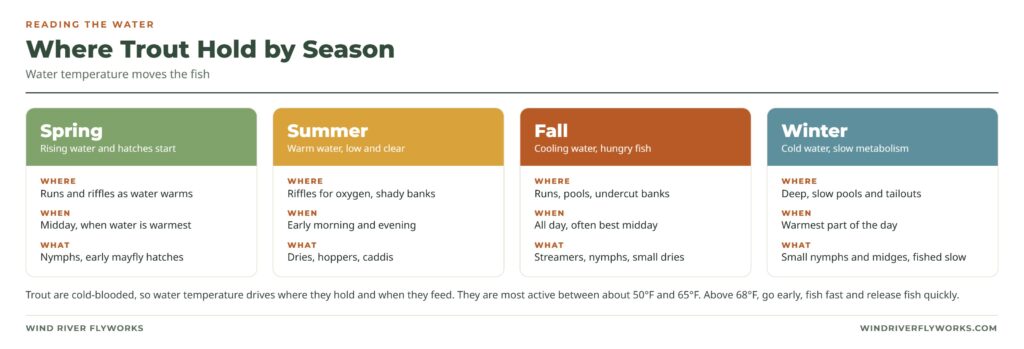
Trout are cold-blooded, so water temperature drives where they hold and when they feed.
Spring: as water warms, trout move into runs and riffles. Fish midday, when the water is warmest.
Summer: trout seek oxygen and shade in riffles, deep runs and shaded banks. Fish early and late. When water tops about 68°F, give the trout a break.
Fall: water cools and trout feed hard before winter. Runs, pools and undercut banks are all good, and streamers shine.
Winter: trout slide into deep, slow pools and tailouts. Fish small nymphs slowly, near the bottom, in the warmest part of the day.
How to Fish a New Stretch of River
Stop and look before you wade in. Many trout hold in the shallow water right at your feet.
Find the seams, structure and depth changes. Polarized sunglasses help a lot.
Work from downstream to upstream. Trout face upstream, so you can approach from behind them.
Fish the closest water first, then work out. Make a few good drifts in each spot and move on.
Cover water. If a spot doesn’t produce after several good drifts, try the next one.
Read the Water, Then Pick the Fly
Reading water is a skill you’ll keep improving for as long as you fish. Look for food, cover and easy current, and you’ll find trout on any river. Once you’ve found them, our guides to nymph fishing, dry fly fishing and streamer fishing will help you put the right fly in front of them.
Keep reading
Reading the Water: surface clues that show what’s underneath, and how to work a run
Shop This Article
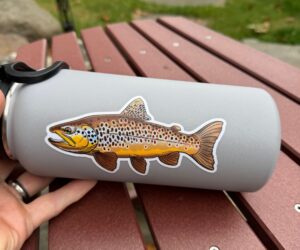
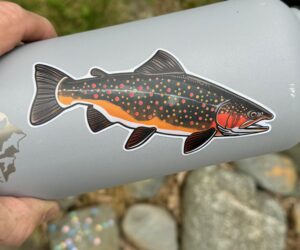
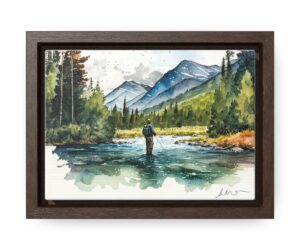
Stickers and gear that go with this guide, drawn by Nick and printed in the USA.