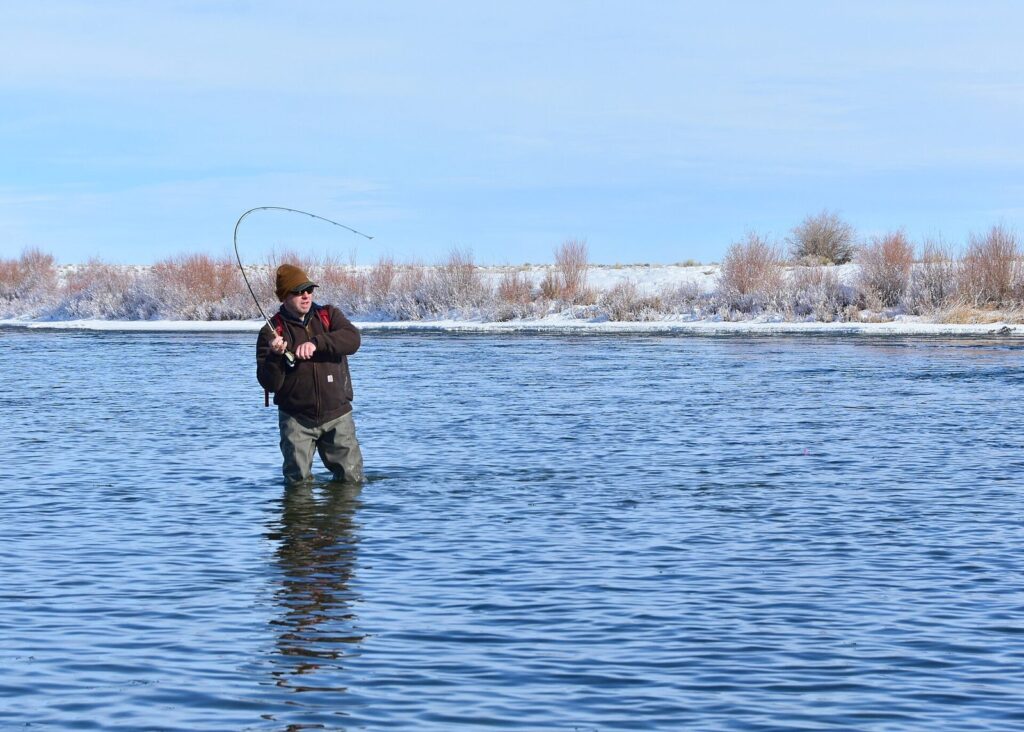
Winter fly fishing on the Green River at Seedskadee National Wildlife Refuge, Wyoming. Photo: Tom Koerner/U.S. Fish and Wildlife Service (public domain).
Winter is one of the best-kept secrets in fly fishing. The crowds are gone, the trout are stacked up in the slow, deep runs, and on a sunny afternoon you can have a whole stretch of river to yourself. The catch? It’s cold. And here’s the thing most anglers learn the hard way: slow fishing rarely ends a winter day early. Cold feet and numb fingers do.
The good news is that staying warm isn’t about buying the most expensive gear. It’s about a few simple habits: dressing in the right layers, keeping your hands and feet dry, and fishing the warmest part of the day. Here’s how we do it.
1. Dress in Layers (and Ditch the Cotton)
Layering is the whole game. Instead of one giant coat, you wear several thinner layers that each do a job. That way you can add or remove a layer as the day warms up or the wind kicks in.
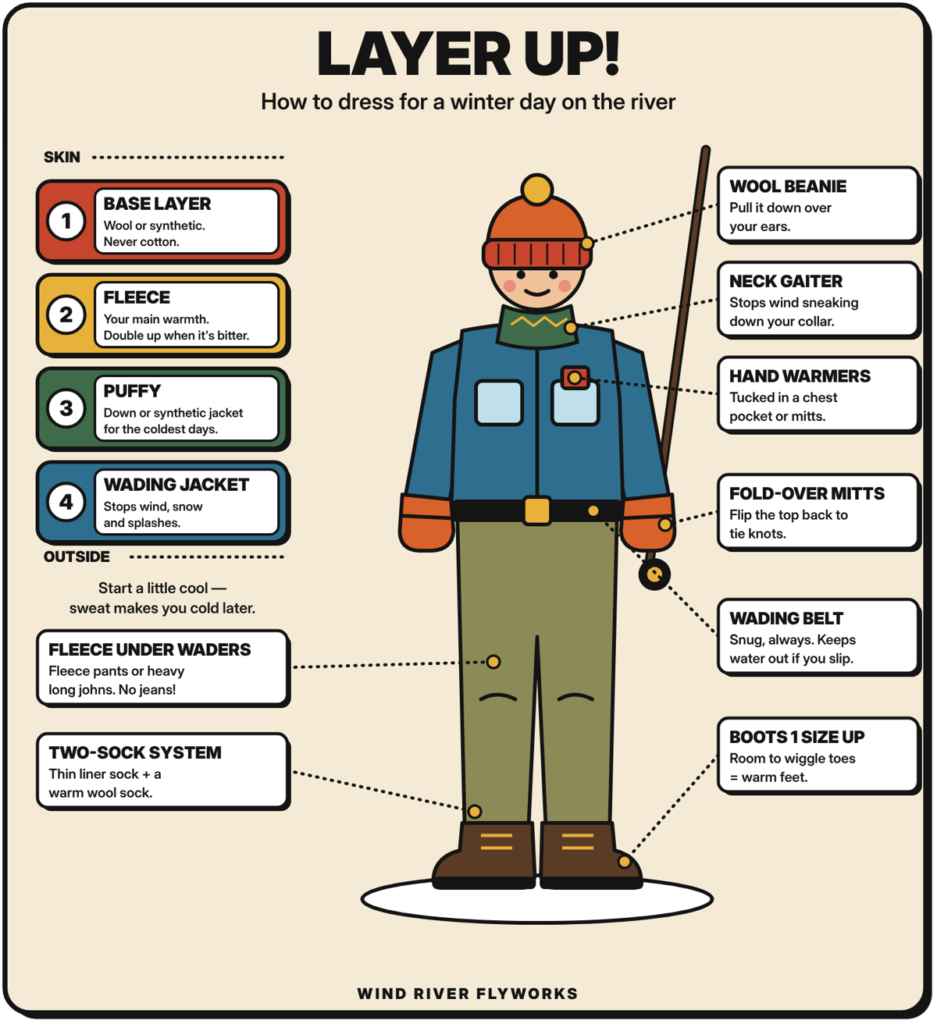
The four layers, from your skin out, plus the gear that keeps the cold out at the edges.
- Base layer: A wool or synthetic top and bottom that sits against your skin and moves sweat away. Never cotton. Cotton soaks up moisture and stays wet, and wet clothes pull heat out of your body fast. That includes cotton T-shirts, sweatpants, jeans and cotton socks.
- Fleece: Your main warmth layer. A fleece top and fleece pants under your waders cover most winter days. On bitter days, wear two.
- Puffy: A light down or synthetic insulated jacket for the coldest mornings and windy afternoons. It packs small, so toss it in your bag even if you don’t start in it.
- Wading jacket: A waterproof, wind-blocking shell on the outside. Wading jackets are cut short so they don’t drag in the water. Look for cuffs that close tight over your gloves and a hood that fits over your hat.
Start a little cool. It sounds backward, but if you’re toasty in the parking lot, you’ll be sweating by the time you hike to the river. Then that sweat chills you as soon as you stand still in the water. Unzip or shed a layer for the walk in and put it back on when you start fishing.
2. Keep Your Feet Warm
Your feet are standing in water that is often just a few degrees above freezing, so they’re usually the first thing to give out. A few tips make a huge difference:
- Use a two-sock system. Wader booties don’t breathe, so feet sweat. Wear a thin synthetic liner sock against your skin to move that sweat away, with a thicker wool sock over it for warmth.
- Go up a boot size. If your wading boots fit perfectly in summer, they’ll be too tight with winter socks. Tight boots squeeze off blood flow, and that makes cold feet worse, not better. You want room to wiggle your toes.
- Check your waders for leaks before winter. A slow leak that’s no big deal in July can end your day in January. Fill them with water in the yard or shine a flashlight inside them in a dark room to find pinholes.
- Stand on the bank when you can. In winter, trout often hold in slow water close to shore. If you can reach them from dry ground, do it. Every minute out of the water is a minute your feet warm back up.
- Consider bootfoot waders. If you fish a lot in the cold, waders with the boot built right in (often with insulation) skip the cold spot where a stocking foot meets a separate boot.
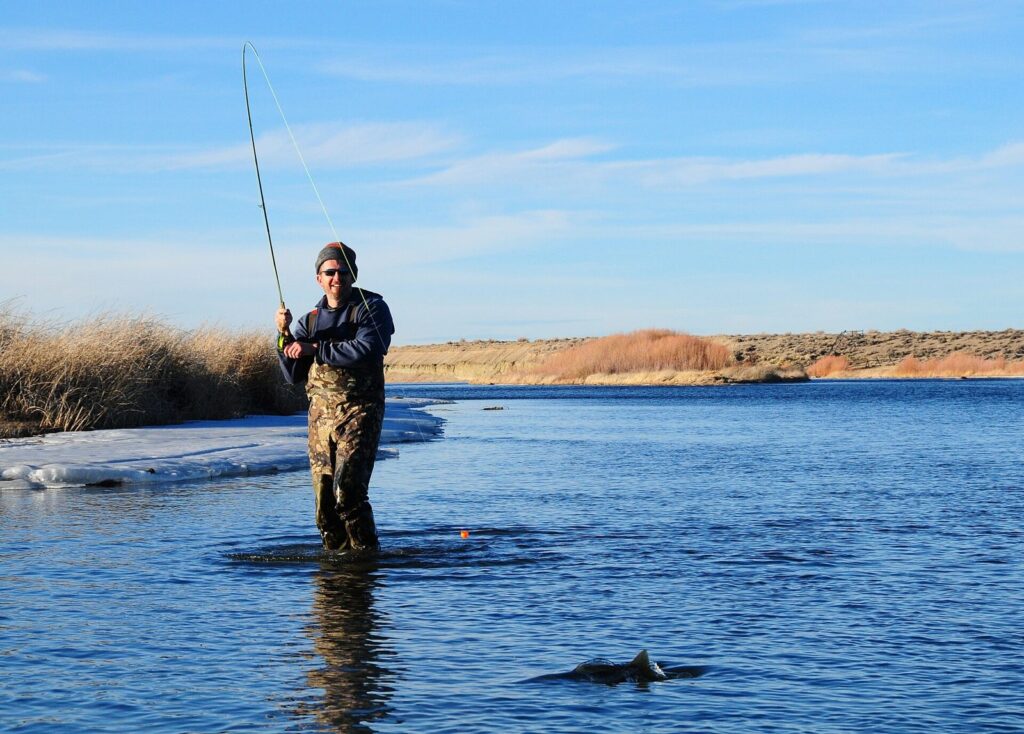
Watch out for shelf ice along the banks. It can look solid and break without warning. Photo: Tom Koerner/U.S. Fish and Wildlife Service (public domain).
3. Keep Your Hands Working
Cold hands are the most frustrating part of winter fishing. Numb fingers can’t tie a clinch knot on a size 20 midge, can’t strip line, and can’t feel a light take. The goal is warm hands that still work.
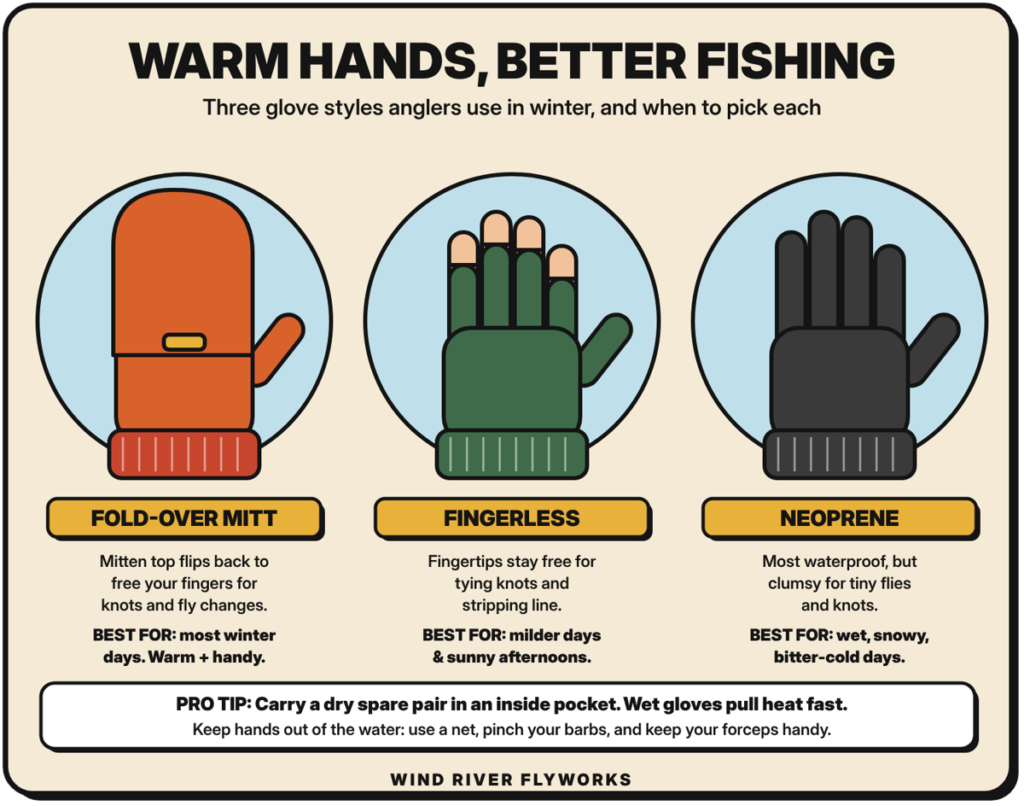
Three glove styles and when each one works best.
- Fold-over mitts are the favorite of a lot of winter anglers. Your fingers stay covered in a mitten while you fish, and the top flips back when you need to tie a knot or change a fly. Pick a pair with a little strap or magnet so the flap doesn’t flop into your line.
- Fingerless gloves keep your palms and the backs of your hands warm while your fingertips stay free. They’re great on milder days, and they make a good liner under a mitt.
- Neoprene gloves are the most waterproof option, but they’re clumsy. Save them for wet, snowy, bitter days.
- Carry a dry spare pair. Keep it in an inside pocket where your body heat keeps it warm. When the first pair gets wet, swap.
- Keep your hands out of the water. Use a net, pinch down your barbs so hooks come out fast, and keep your forceps (hemostats) where you can grab them.
- Bring hand warmers. Those little air-activated packets work great in a chest pocket, inside your mitts, or tucked in your waders.
- Rig up at home. Tie on your leader, tippet and first flies in a warm kitchen, not on a frozen tailgate.
4. Don’t Forget Your Head and Neck
- Wear a warm hat that covers your ears. A wool or fleece beanie is perfect. Some anglers wear a ball cap underneath to block glare off the water. That’s a good trick for spotting fish.
- Seal the gap at your collar. A neck gaiter stops cold wind from sneaking down your jacket, and you can pull it up over your nose and cheeks when the wind bites. On sunny days it also protects your face, because snow and water reflect a lot of sunlight back up at you.
- Bring sunglasses. Polarized lenses cut the glare off snow and water so you can see fish and follow your indicator.
5. Fish the Warmest Hours
In summer, the early bird gets the trout. In winter, you can sleep in. The best fishing usually happens from late morning to mid-afternoon. That’s when the sun is highest, the water warms up a little, tiny midges start to hatch, and the trout wake up and feed.
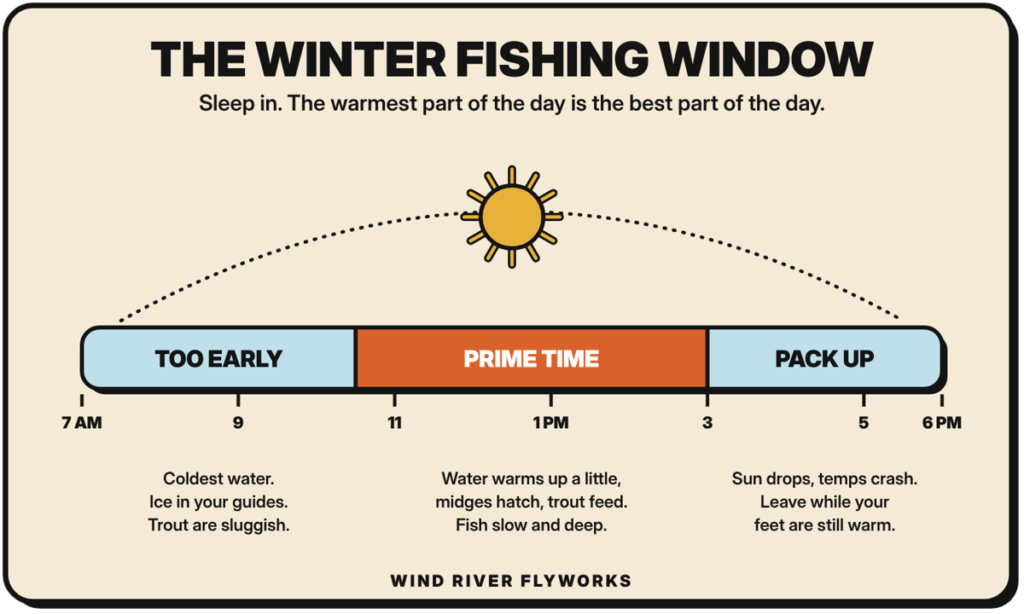
Your exact window depends on your river and the weather, but midday is almost always best.
- Pick your day. A calm, sunny 35-degree afternoon fishes (and feels) much better than a windy 35-degree morning. Watch the forecast and go on the nice days.
- Plan a short trip. Two or three hours of good fishing beats six hours of shivering. Quit while you’re still having fun.
- Deal with ice in your guides. Below freezing, water on your line freezes in the rod guides and your line stops shooting. Dip the rod tip in the river for a few seconds to melt the ice (the water is warmer than the air). Don’t pick or scrape at it, because that can damage the guides.
- Fish slow and deep. Cold trout won’t chase far. For the full game plan, see our Seasonal Fly Fishing Tips, How to Nymph Fish and Midges and Small Flies guides.
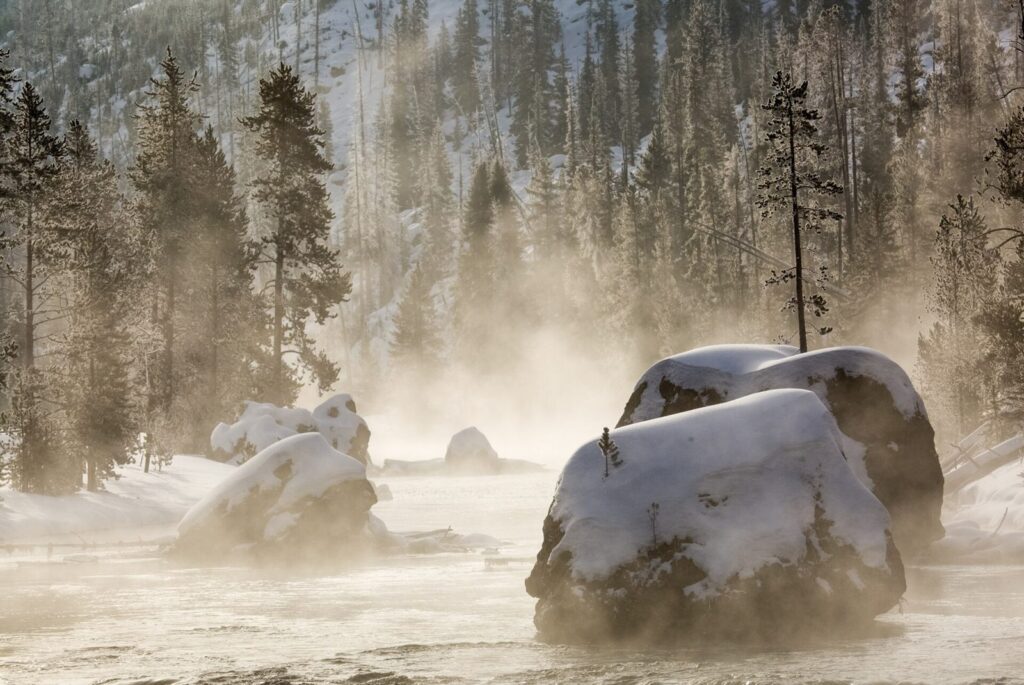
Cold air, warmer water: steam rising off the Firehole River in Yellowstone. Photo: Neal Herbert/National Park Service (public domain).
6. Fuel Up and Warm Up
- Pack a thermos. Hot coffee, tea, cocoa, soup or chili is a big morale boost on a cold bank.
- Eat and drink. Your body burns a lot of energy staying warm. Snack often and keep drinking water, even if you don’t feel thirsty.
- Skip the flask. Alcohol makes you feel warm because it opens up the blood vessels in your skin, but it actually helps your body lose heat faster. Save the celebration for later.
- Warm the truck, but not too much. Start out warm, but not so hot that your feet are sweating before you even step in the water.
- Pack a “dry bag” for the ride home. Dry socks, a dry shirt and a warm hat waiting in the truck feel amazing after a cold day.
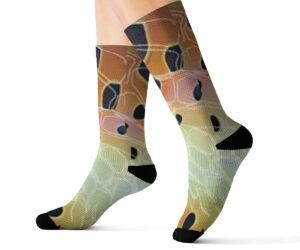
After a cold day on the river, nothing beats warming up with something good in a Fly Fishing Pint Glass and pulling on a fresh pair of Cutthroat Trout Socks.
7. Stay Safe: Know the Warning Signs
Winter fishing is safe when you respect the cold. Hypothermia (when your body loses heat faster than it can make it) can sneak up on you, especially if you get wet. The early signs are easy to remember as the “umbles”:
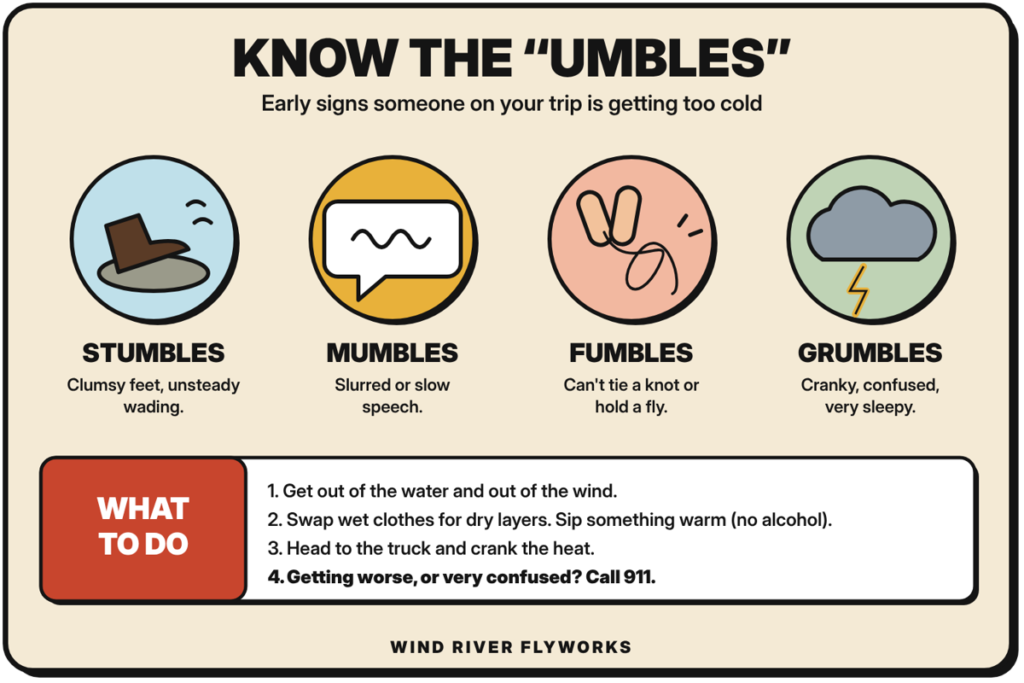
Watch for the “umbles” in yourself and your fishing buddies.
- Stumbles: clumsy, unsteady wading.
- Mumbles: slurred or slow speech.
- Fumbles: can’t tie a knot or hold onto a fly.
- Grumbles: cranky, confused or very sleepy.
Shivering hard is your body’s early warning, too. If you or a buddy shows these signs, stop fishing. Get out of the water and the wind, swap wet clothes for dry, sip something warm, and head to the truck heater. If someone is getting worse or seems very confused, call 911. The CDC’s winter weather guide has more on spotting and treating hypothermia.
A few more winter safety habits:
- Fish with a buddy when you can, and always tell someone where you’re going and when you’ll be back.
- Wear your wading belt snug. If you slip, it helps keep water from rushing into your waders.
- Stay off shelf ice. Ice along the banks can look solid and break without warning.
- Wade a little shorter. Cold, stiff legs and icy rocks make it easier to slip. A wading staff helps a lot.
Your Winter Fly Fishing Checklist
- Wool or synthetic base layer (top and bottom)
- Fleece top and pants (plus a spare fleece)
- Puffy jacket
- Waterproof wading jacket
- Leak-free waders and a wading belt
- Liner socks + wool socks
- Wading boots with room for thick socks
- Fold-over mitts + a dry spare pair of gloves
- Hand warmers
- Warm beanie and a neck gaiter
- Polarized sunglasses
- Thermos, snacks and water
- Dry clothes waiting in the truck
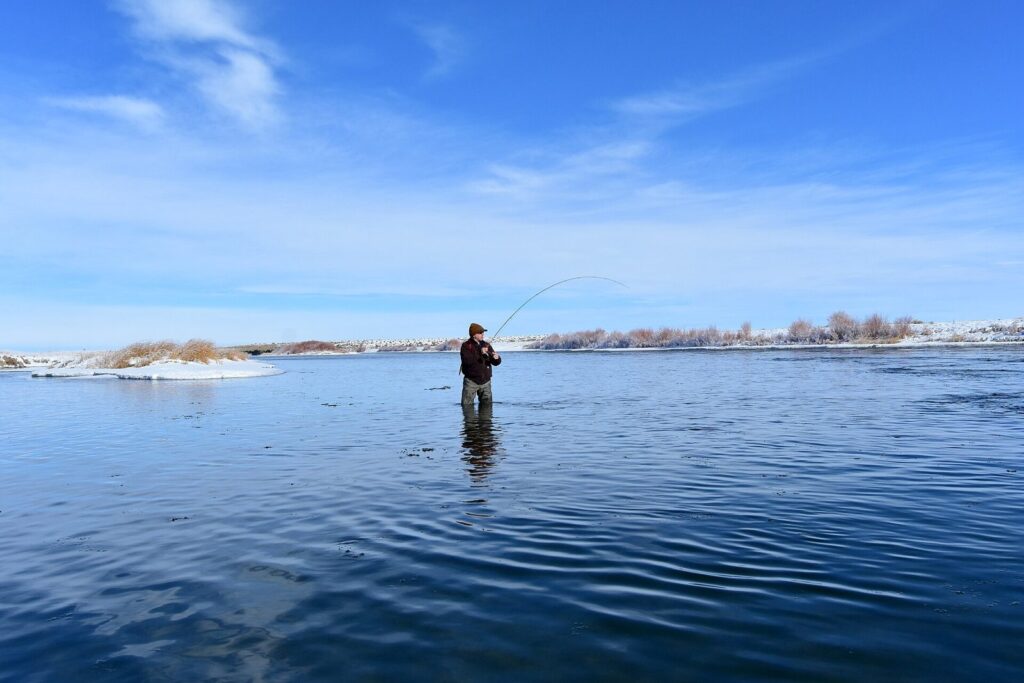
Dress right and winter can be the most peaceful fishing of the year. Photo: Tom Koerner/U.S. Fish and Wildlife Service (public domain).
Get Out There
Winter fly fishing isn’t about toughing it out. It’s about being smart: layer up, keep your hands and feet dry, fish the warm hours, and head home while it’s still fun. Do that, and you might find that some of your best days on the water happen when there’s snow on the banks.
Tight lines, and stay warm out there!
Gearing up for winter? Check out our trout stickers for your thermos or cooler like the Brown Trout Sticker, and trout art like the Abstract Brown Trout Canvas to bring the river home for the winter.
Photo Credits
- Winter flyfishing at Seedskadee National Wildlife Refuge (three photos). Tom Koerner/U.S. Fish and Wildlife Service. Public domain. Via Wikimedia Commons, Wikimedia Commons, Wikimedia Commons.
- Firehole River in winter. Neal Herbert/National Park Service. Public domain. Via Wikimedia Commons.
- All illustrations: original artwork by Wind River Flyworks.
Shop This Article
Gifts and gear for after a cold day on the water, from Wind River Flyworks.
-
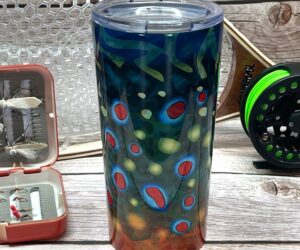
Fly Fishing Trout Travel Mugs 20 oz
$26.99 Select options This product has multiple variants. The options may be chosen on the product page -
Cutthroat Trout Socks
$14.99 Select options This product has multiple variants. The options may be chosen on the product page -
Fly Fishing Pint 4-Glass Set
$69.99 Select options This product has multiple variants. The options may be chosen on the product page