Walk into any fly shop and you’ll see thousands of patterns. It’s easy to feel lost. The good news is that learning how to choose flies for fly fishing comes down to a few simple questions: What are the trout eating? Where in the water are they eating it? And roughly how big is it?
This fly selection guide covers matching the hatch, the four bugs trout eat most, how to read a rise, and a short list of the best trout flies to carry. By the end you’ll know what fly to use for trout on almost any day.
What Does “Matching the Hatch” Mean?
A “hatch” is when aquatic insects come off the water in numbers, usually as they change from underwater nymphs into winged adults. Trout key in on whatever is most plentiful, and they can get picky. Matching the hatch means choosing a fly that looks like that insect in three ways, in this order:
- Size: the most important. A fly that’s the right size but a little off in color will out-fish a perfect color in the wrong size.
- Shape (profile): upright wings like a mayfly, a tent-shaped wing like a caddis, or a long, flat stonefly.
- Color: get it close. Hold a bug next to your fly and match the general shade.
Also match the stage of the insect. A trout eating emergers just under the surface may ignore a perfect dry fly sitting on top.
The Mayfly Life Cycle (and the Fly for Each Stage)
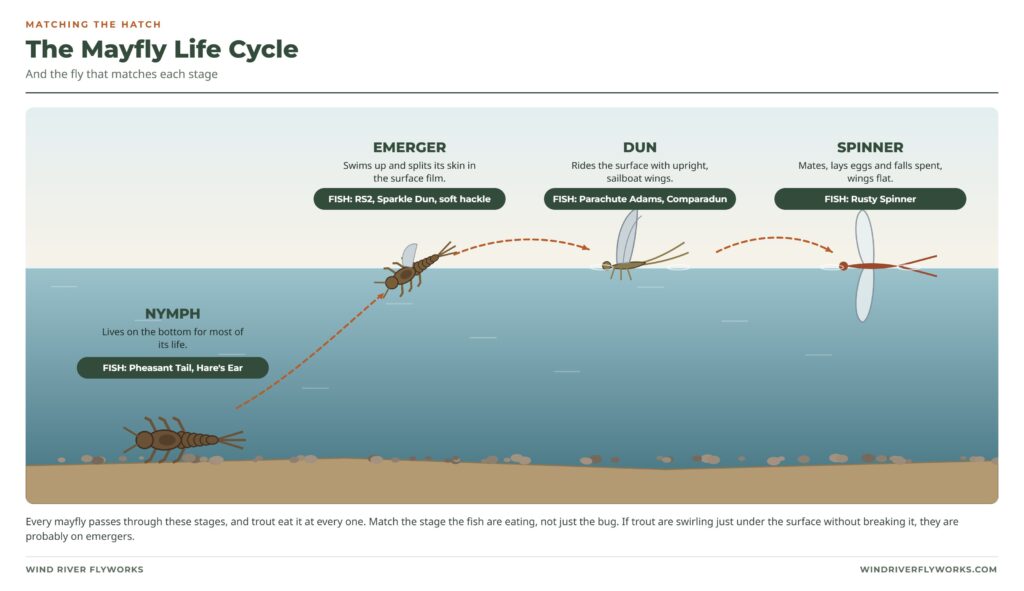
Mayflies are the classic hatch, and their life cycle shows why stage matters. Trout eat them at every step:
- Nymph: lives on the river bottom for most of its life. Fish a Pheasant Tail or Hare’s Ear. See our nymph fishing guide.
- Emerger: swims to the surface and splits its skin in the surface film. This is when trout feed hardest. Try an RS2, Sparkle Dun or a soft hackle.
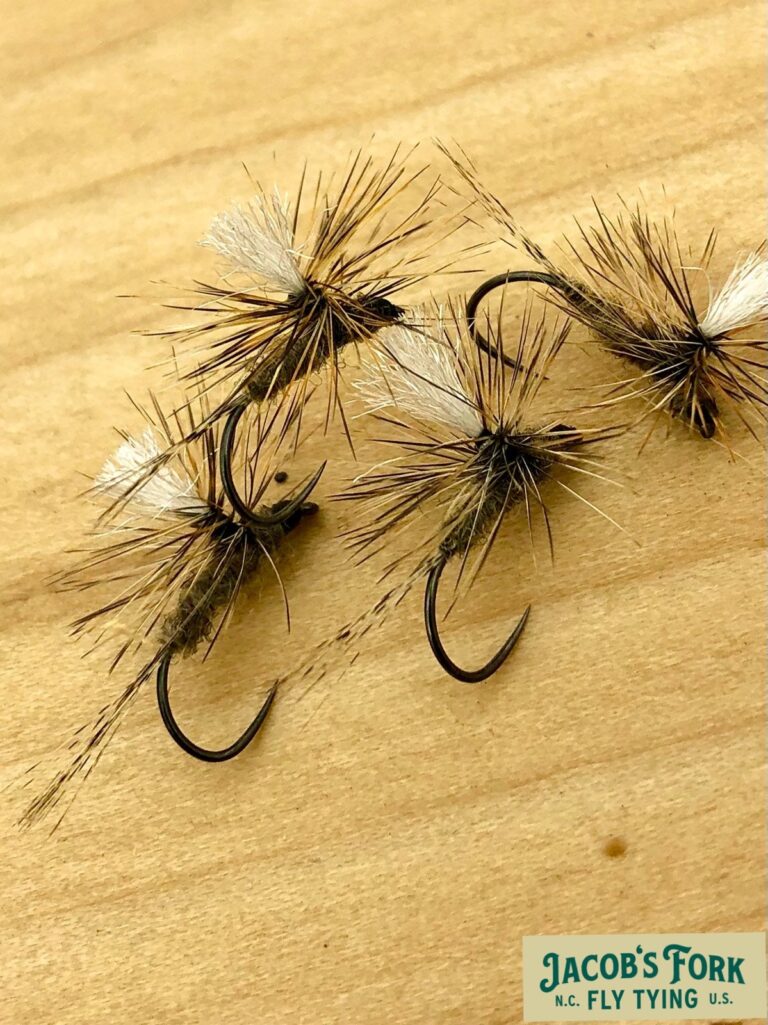
- Dun: rides the surface while its wings dry. Fish a Parachute Adams or Comparadun. See our dry fly fishing guide.
- Spinner: after mating, the female lays eggs and falls to the water with wings spread flat. A Rusty Spinner fishes flush in the film.
The Four Bugs Trout Eat Most
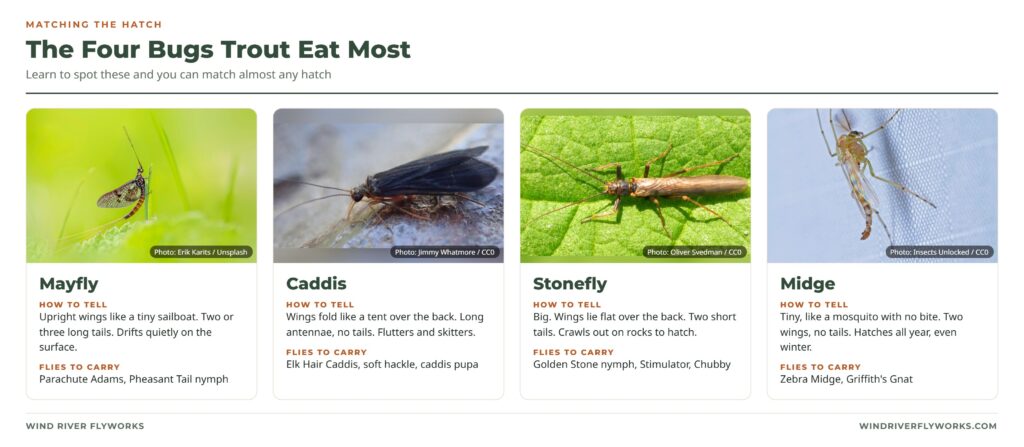
You don’t need to be an entomologist. If you can tell these four apart, you can make a good fly choice on almost any trout stream.
- Mayflies: upright, sailboat-like wings and two or three long tails. Flies: Parachute Adams, Pheasant Tail, Sparkle Dun.
- Caddisflies: wings folded like a tent over the back, no tails, and they flutter like moths. Flies: Elk Hair Caddis, X-Caddis, soft hackles.
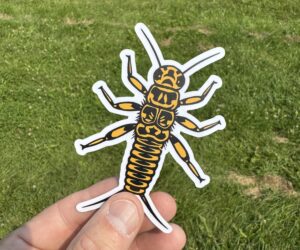
- Stoneflies: big, long bugs with two tails and wings folded flat. Nymphs crawl to the bank to hatch. Flies: Golden Stone, Pat’s Rubber Legs, Chubby Chernobyl.
- Midges: tiny, often size 18 to 24. They hatch all year and are a big part of a trout’s winter diet. Flies: Zebra Midge, Griffith’s Gnat.
Trout also eat baitfish, sculpins, leeches and crayfish. When there’s no hatch, or you’re after a big fish, try a streamer. Our streamer guide explains how.
How to Figure Out What Trout Are Eating
- Look at the air and water. Bugs flying upstream, sitting on rocks, or floating on the surface tell you what’s hatching.
- Flip a few rocks. The nymphs clinging underneath show what’s living in that river right now, and how big they are.
- Watch the rises. A splashy rise usually means caddis or a fast-moving bug. A slow, gentle sip means duns or spinners. Swirls with no nose showing mean emergers just under the surface.
- Check spider webs and bank brush. Webs near the water collect whatever has been hatching.
- Ask a local fly shop. They know what’s hatching this week. Buying a few flies there is a fair trade for the advice.
What Fly to Use for Trout When Nothing Is Hatching
Most of the time, there is no obvious hatch. Then trout feed below the surface, and roughly 80 to 90 percent of what they eat is underwater. Here’s a simple plan:
- Start with a nymph. A beadhead Pheasant Tail or Hare’s Ear in size 14 to 18 is a great searching fly. Use a strike indicator so you can see the take.
- Try a dry-dropper. Hang a small nymph under a buoyant dry fly like a Chubby Chernobyl. You cover two depths at once.
- Go big with a streamer. A Woolly Bugger stripped through deeper runs and along banks can move the biggest fish in the river.
The Best Trout Flies for Beginners
You don’t need a hundred patterns. These eight will catch trout almost anywhere:
- Parachute Adams (dry, size 12 to 18): the go-to mayfly imitation.
- Elk Hair Caddis (dry, 12 to 16): floats well and imitates caddis.
- Chubby Chernobyl (dry, 8 to 12): big foam fly for hoppers and stoneflies, and a great indicator for a dropper.
- Pheasant Tail Nymph (nymph, 14 to 18): imitates mayfly nymphs.
- Hare’s Ear Nymph (nymph, 12 to 16): a buggy all-rounder.
- Zebra Midge (nymph, 18 to 22): a must in winter and on tailwaters.
- Golden Stone Nymph (nymph, 6 to 10): big meal for big fish.
- Woolly Bugger (streamer, 6 to 10): the most versatile fly ever tied.
Tips for Better Fly Selection
- When in doubt, go smaller. If trout are rising but refusing your fly, drop one or two hook sizes.
- Change flies after 10 good drifts. If a fish didn’t eat after several good presentations, show it something different.
- Fix the drift before the fly. Trout reject flies that drag more often than flies that are the wrong pattern. A natural, drag-free drift matters more than the exact fly.
- Match your tippet to the fly. Small flies need finer tippet to move naturally. See our leader and tippet guide.
- Fish where the trout are. The right fly in empty water won’t catch anything. Learn to read a river.
Final Thoughts
Choosing flies doesn’t have to be confusing. Match the size first, then the shape, then the color. Watch the water, notice what stage the bugs are in, and fish the fly that matches. When nothing is hatching, go under the surface. Start with the eight flies above, pay attention on the water, and you’ll build a fly box and the instincts to match the hatch on any river.
Flies in This Guide

Parachute Adams
Get it from Jacobs Fork →
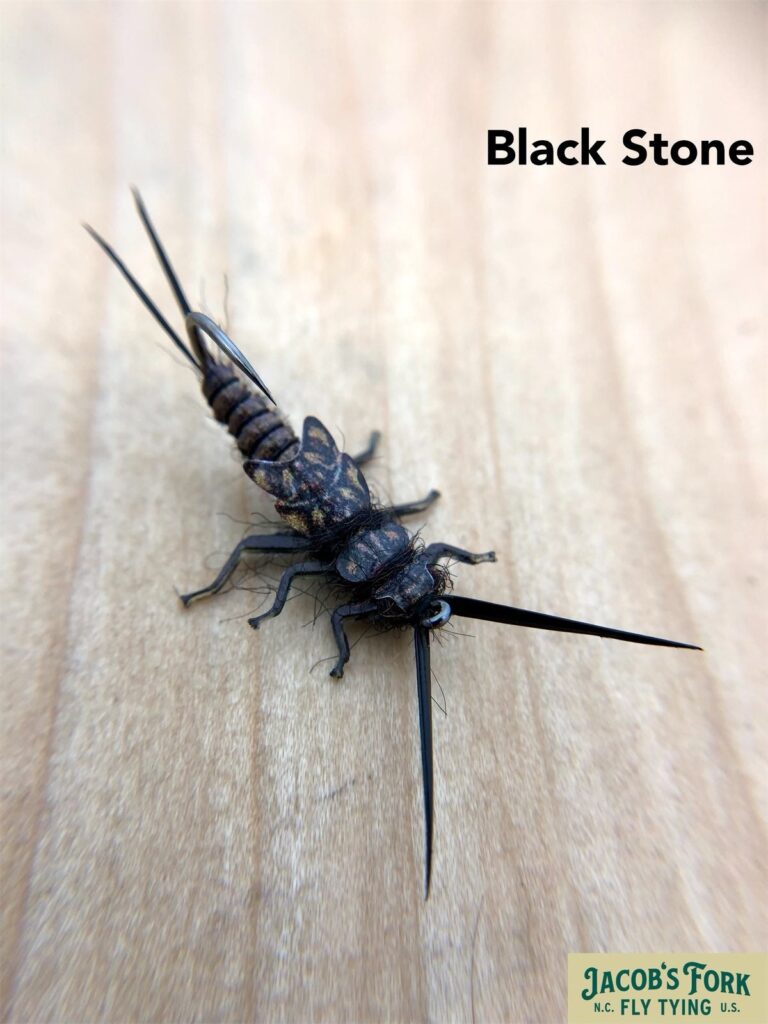
Realistic Stonefly Nymph
Get it from Jacobs Fork →
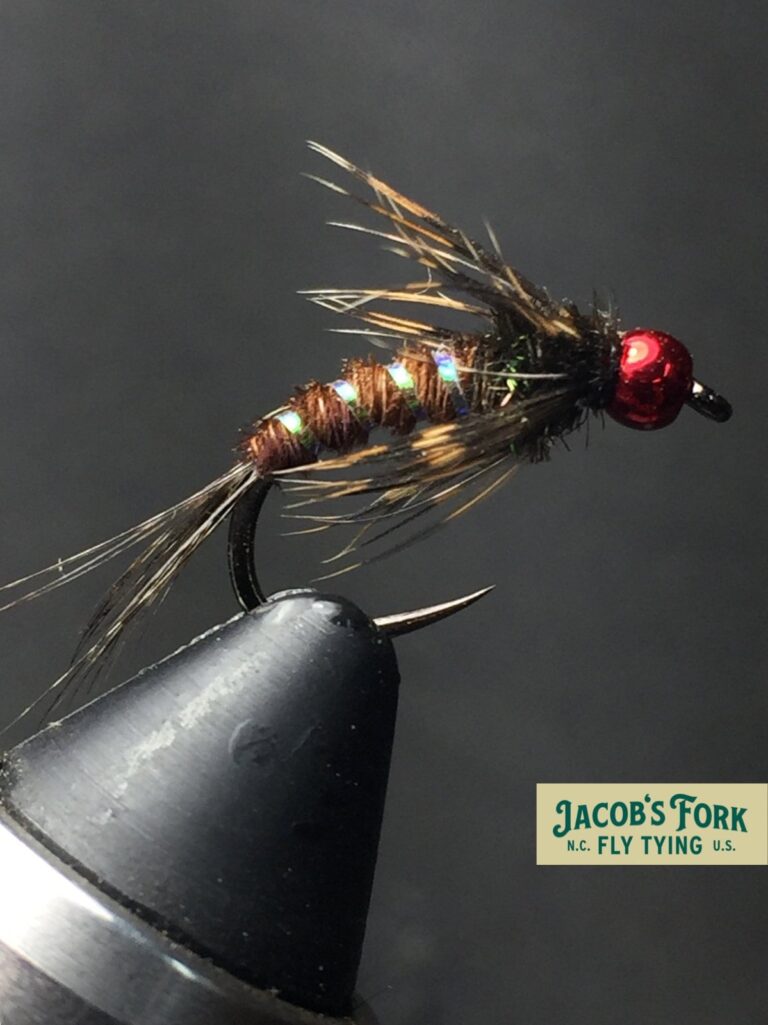
Red Bead Head Soft Hackle Pheasant Tail
Get it from Jacobs Fork →
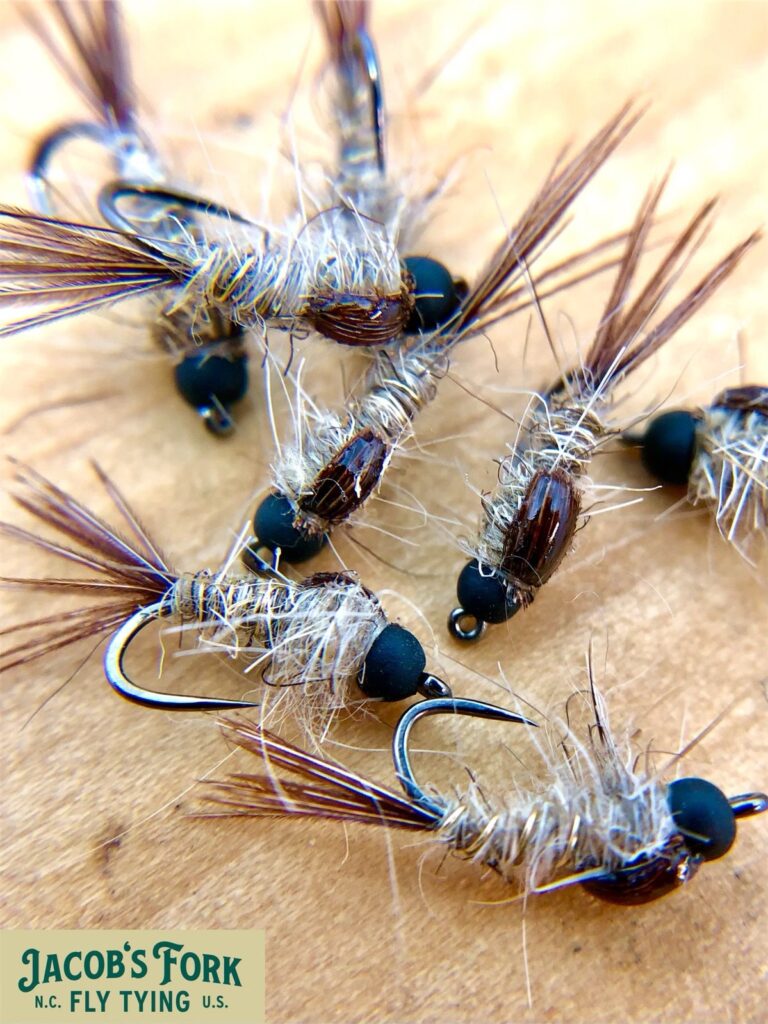
Tom's Stealth Hare's Ear Nymph
Get it from Jacobs Fork →
Flies tied by Jacobs Fork Fly Tying, photos used with permission. We don’t earn anything from these links.
Shop This Article
Stickers and gear that go with this guide, drawn by Nick and printed in the USA.