How to Nymph Fish: A Complete Guide to Catching More Trout Underwater

If you want to catch more trout, learn how to nymph fish. Trout do most of their eating under the surface, picking off insect larvae (nymphs) that drift along the bottom. On most days, a well-fished nymph will out-catch a dry fly by a wide margin.

Nymphing has a reputation for being complicated, but it comes down to four things: getting your flies to the bottom, letting them drift naturally, seeing the strike, and fishing the right water. This guide walks through each one, from your nymph fishing setup to reading the drift.

Why Nymph Fishing Works

Mayflies, caddisflies, stoneflies and midges spend most of their lives as nymphs and larvae on the river bottom. They get knocked loose by the current or drift on purpose, and trout line up to eat them. A trout can eat nymphs all day without ever rising to the surface. When you fish a nymph, you’re fishing where the food is.

Your Nymph Fishing Setup

You can nymph with any trout rod, but a few things make it easier:

  • Rod: a 9 ft, 5 wt is great for indicator nymphing. A 10 ft, 3 or 4 wt is ideal for euro nymphing.
  • Leader: a 9 ft, 4X or 5X tapered leader works for most indicator rigs.
  • Tippet: 4X or 5X between flies. Fluorocarbon sinks faster and is harder for fish to see, which makes it a great choice for nymphs.
  • Weight: split shot or tungsten putty, plus beadhead flies.
  • Indicator: a small yarn or air-lock style float. See our guide to strike indicators to choose one.
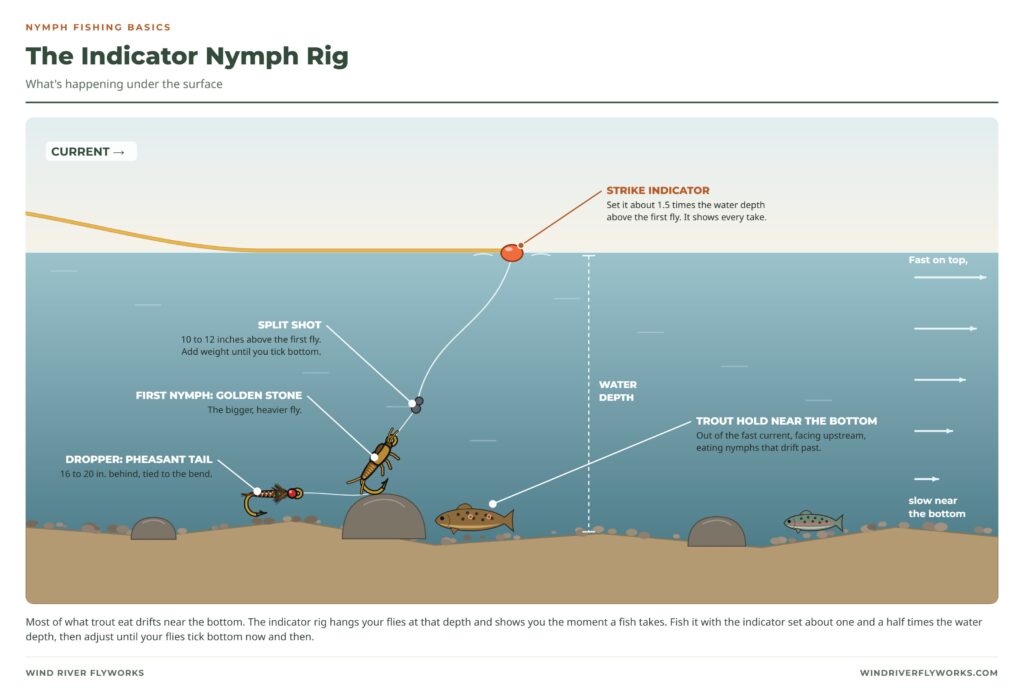
Nymph fishing with an indicator nymph rig under the water: strike indicator, split shot, two nymphs near the bottom where trout hold facing upstream

How to Rig an Indicator Nymph Rig

  1. Set the indicator. Start it about 1.5 times the water depth above your first fly. In 3 feet of water, that’s about 4 to 5 feet. The leader angles downstream in the current, so it needs extra length to reach the bottom.
  2. Add split shot. Pinch one or two small shot about 10 to 12 inches above the first fly. The shot gets the flies down; the flies don’t have to.
  3. Tie on the first fly. Use the heavier or bigger fly here, like a beadhead Pheasant Tail, Hare’s Ear or Golden Stone.
  4. Add a dropper. Tie 16 to 20 inches of tippet to the bend of the first hook with an improved clinch knot, then tie on a smaller fly like a Zebra Midge or small Pheasant Tail.

Getting the depth right is everything. If you never feel your flies tick the bottom or snag now and then, you’re too shallow. Add weight or move the indicator up until you do.

How to Fish a Nymph: Cast, Mend and Drift

The goal is a dead drift: your flies should move at the same speed as the current near the bottom, with no pull from the line.

  1. Cast upstream. Cast at a slight angle up and across the current, a few feet above where you think fish are holding. This gives the flies time to sink.
  2. Mend right away. Flip the line upstream so the faster surface current doesn’t drag the indicator ahead of the flies.
  3. Follow the indicator. Lift the rod tip and keep slack off the water as the indicator drifts back toward you. Don’t let it drag or wake.
  4. Let it drift through. Fish the drift until the indicator swings or starts to pull. Then pick up and cast again.

Short, accurate drifts catch more fish than long sloppy ones. Fifteen to twenty feet of good drift is plenty.

Strike Detection: When to Set the Hook

Trout rarely yank a nymph. Most takes are subtle. Set the hook on anything that looks different:

  • The indicator dips, stops or hesitates.
  • It moves sideways or upstream against the current.
  • It twitches or tips over.

Set with a quick, firm lift of the rod tip downstream, against the direction the fish is facing. Many of your “snags” will turn out to be fish. Setting the hook costs nothing, so set often.

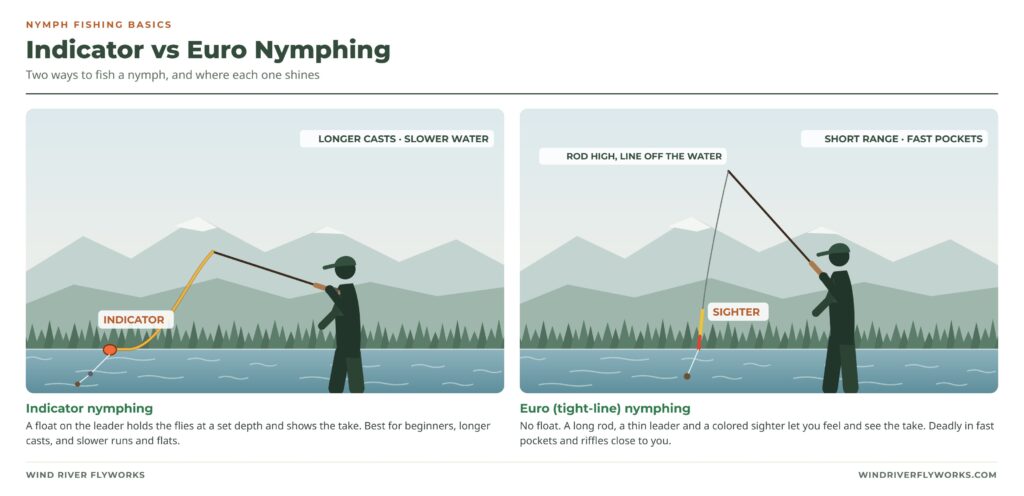
Indicator nymphing vs euro nymphing compared

Indicator Nymphing vs Euro Nymphing

Indicator nymphing is the best place to start. The float holds your flies at a set depth and shows you the take. It works at longer distances and in slower runs, flats and deep pools.

Euro nymphing (also called tight-line or Czech nymphing) skips the float. You use a long rod, a thin leader with a brightly colored section called a sighter, and heavy tungsten flies. You keep the rod high and the line off the water, so you can feel the bottom and see the sighter twitch when a fish takes. It’s deadly in fast pockets and riffles within 15 to 25 feet of you.

Many anglers carry both: an indicator rig for long drifts and slow water, and a tight-line setup for pocket water.

Where to Fish a Nymph

Nymph where the water is 2 to 5 feet deep and moving at a walking pace. Good spots include:

  • Riffles and runs, where the current tumbles nymphs off the bottom.
  • Seams, where fast water meets slow water. Trout sit in the slow side and eat from the fast side.
  • The heads and tails of pools, where food funnels into or out of deeper water.
  • Pocket water behind boulders, where fish rest out of the current.

Common Nymphing Mistakes

  • Not deep enough. The number one problem. Add weight until you tick bottom.
  • Drag. If the indicator moves faster than the bubbles around it, mend.
  • Too much line on the water. Keep the rod tip up and fish shorter drifts.
  • Waiting too long to set. If it looks odd, set the hook.

Start Nymphing This Season

Nymph fishing isn’t flashy, but it’s how most trout get caught. Rig at the right depth, get a clean drift, and set on anything strange. Pair this with a good casting stroke and you’ll start seeing that indicator dip a lot more often.

Flies in This Guide

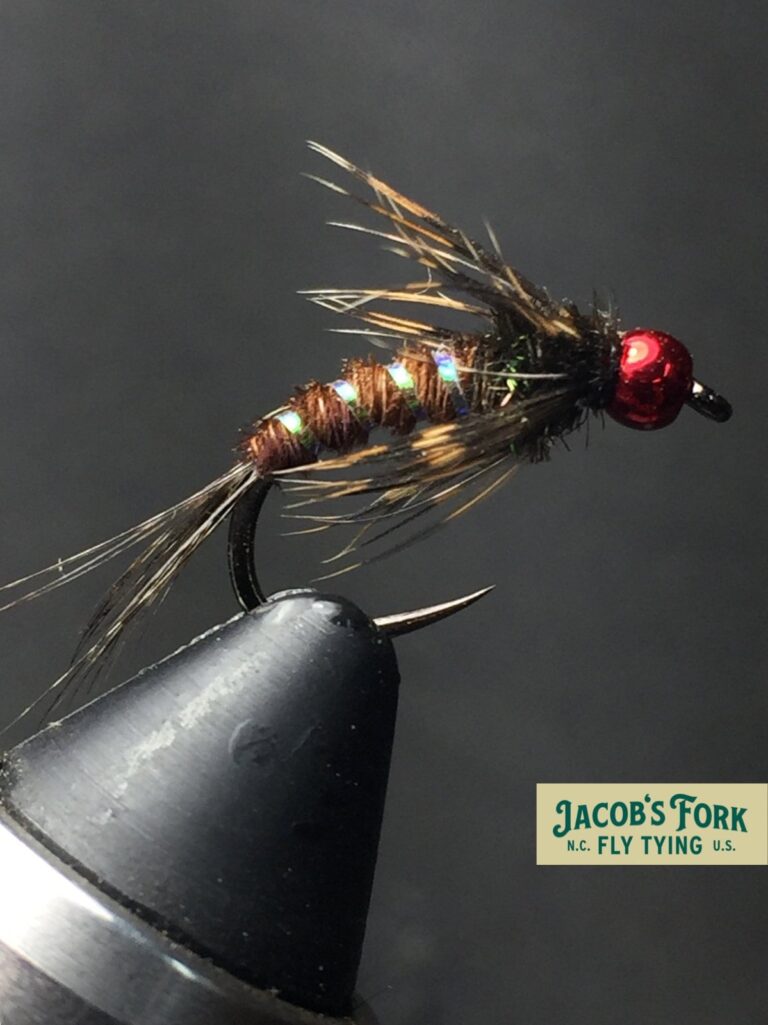
Red Bead Head Soft Hackle Pheasant Tail fly tied by Jacobs Fork Fly Tying

Red Bead Head Soft Hackle Pheasant Tail
Get it from Jacobs Fork →
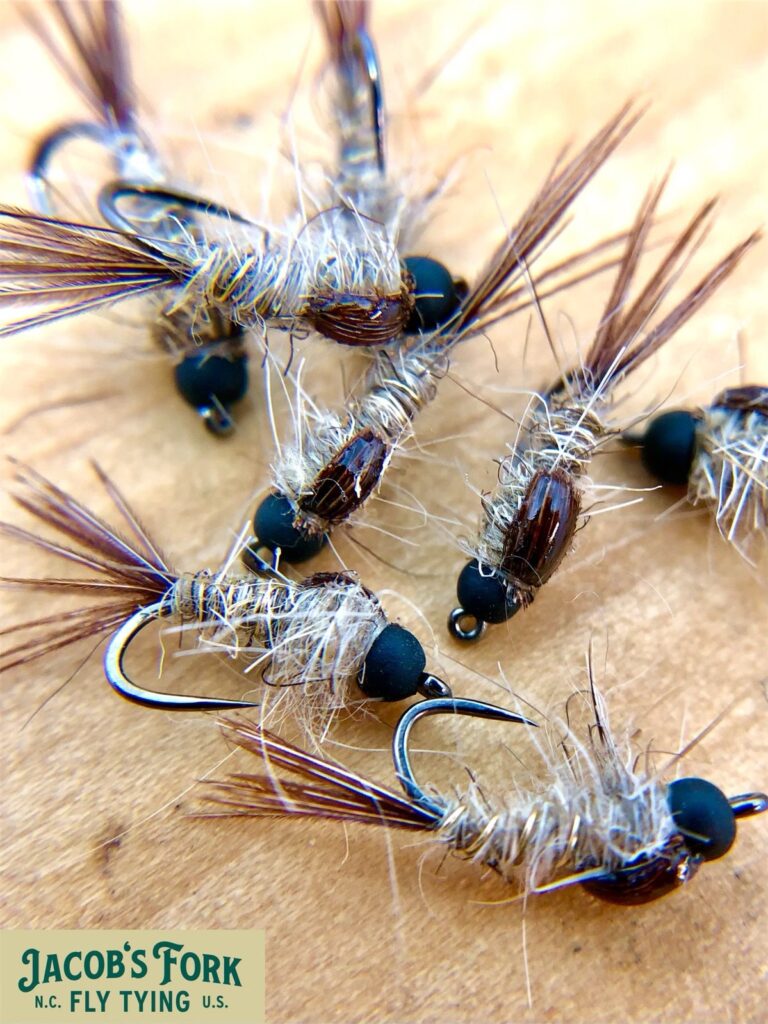
Tom's Stealth Hare's Ear Nymph fly tied by Jacobs Fork Fly Tying

Tom's Stealth Hare's Ear Nymph
Get it from Jacobs Fork →
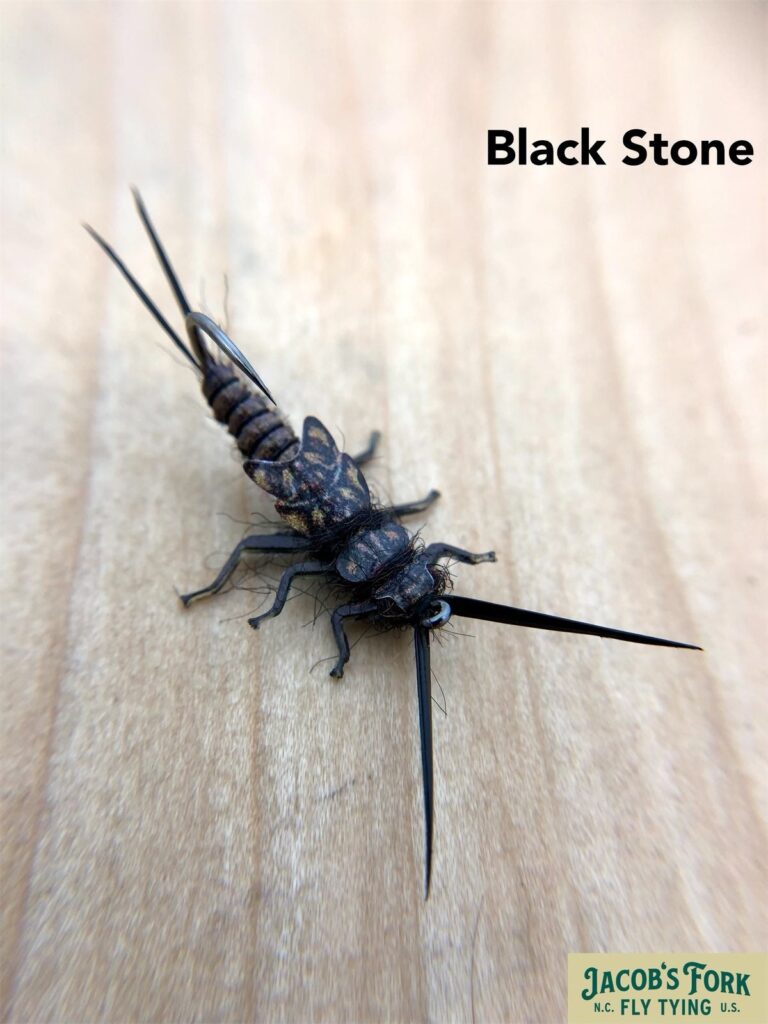
Realistic Stonefly Nymph fly tied by Jacobs Fork Fly Tying

Realistic Stonefly Nymph
Get it from Jacobs Fork →
Flies tied by Jacobs Fork Fly Tying, photos used with permission. We don’t earn anything from these links.

Shop This Article

Stickers and gear that go with this guide, drawn by Nick and printed in the USA.

Get next Sunday's article in your inbox

A new fly fishing article every week, plus 10% off your first order. No spam.

WIND RIVER FLYWORKS

Take 10% off your first order

Join our list for a new fly fishing article every Sunday, new sticker designs and your welcome code. No spam.

Leave a Comment

Your email address will not be published. Required fields are marked *

Shopping Cart